Topicals
CBD topicals work differently from oils and capsules. Here's how they work, what conditions they're best suited for, and what to look for in a quality CBD topical.
When you apply a CBD topical to your skin, the CBD doesn't enter your bloodstream the way it does with oil or capsules. Instead, it binds to CB2 receptors in the skin, muscles, and connective tissue directly beneath the application site.
Your skin has its own mini endocannabinoid system — a network of CB1 and CB2 receptors that help regulate inflammation, sebum production, and local immune response. Topical CBD interacts with this local system, which is why it can be effective for targeted areas without any systemic effects.
Balms and salves are oil-based, anhydrous (no water) products — typically a blend of waxes (beeswax, shea), carrier oils (coconut, hemp seed, jojoba), and CBD extract. They create a protective occlusive barrier on the skin and deliver CBD slowly over time.
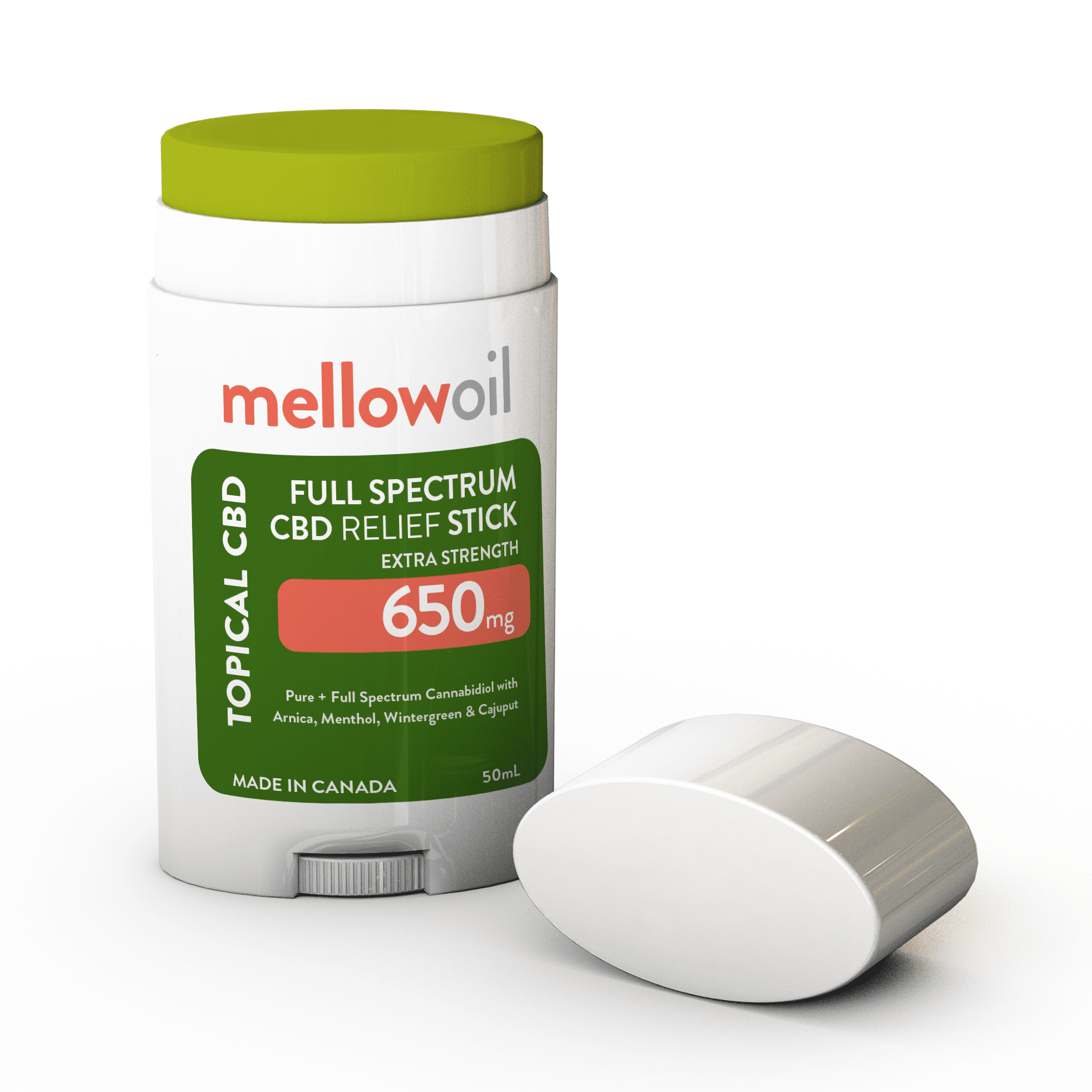
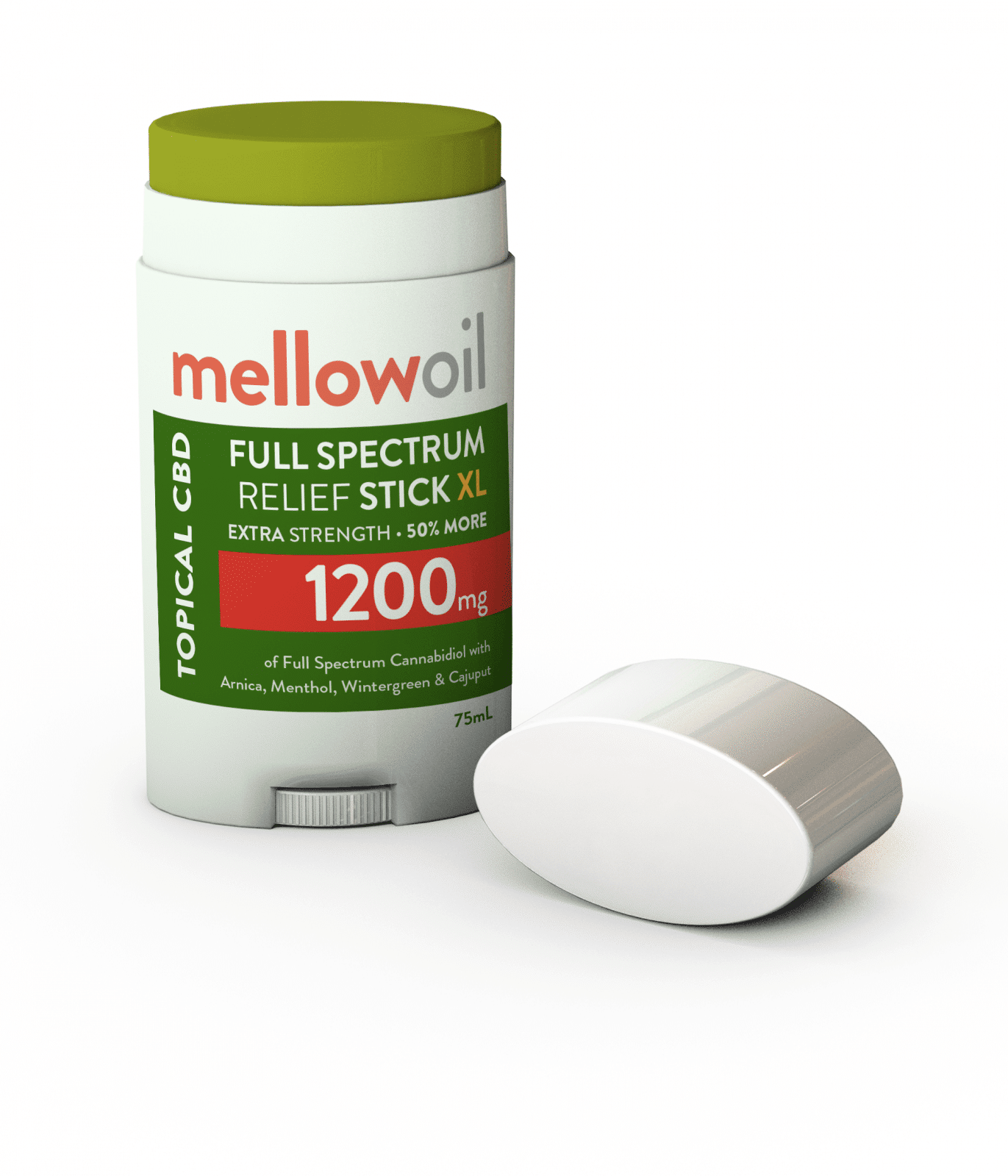
Relief sticks are essentially solid balms in a stick format — convenient for on-the-go application to knees, elbows, and lower back without getting your hands messy.
Creams and lotions incorporate water into the formula, making them lighter and easier to spread over larger areas. They absorb faster but may require more frequent application.
Beef tallow-based balms (like our Ultra-Concentrated Tallow Balm) use rendered beef fat as the carrier — a traditional ingredient that is structurally similar to human sebum and remarkably effective at penetrating the skin barrier.
For deeper muscle relief, look for topicals that combine CBD with CBG (cannabigerol) — a minor cannabinoid with its own anti-inflammatory profile. Our Relief Sticks combine both for this reason.
More is more — at least to a point. A topical needs enough CBD to saturate the local receptors in the target tissue.
| Format | Minimum effective | Good | Excellent |
|---|---|---|---|
| Balm / salve (30g jar) | 200 mg | 500 mg | 1000 mg+ |
| Relief stick (60g) | 300 mg | 600 mg | 1200 mg+ |
| Cream / lotion (100ml) | 250 mg | 500 mg | 1000 mg+ |
Budget options under 200 mg are unlikely to produce meaningful results. Mellow topicals start at 400 mg and go up to 1200 mg per product.
One ingredient worth knowing if you're looking for deeper penetration is DMSO (dimethyl sulfoxide). DMSO is a natural compound derived from wood pulp with a unique property: it penetrates the skin barrier and carries other molecules with it.
When combined with CBD, DMSO can dramatically increase how deeply the CBD reaches into muscle and joint tissue. This is why our Hemp DMSO Relief Stick is consistently one of our most-reviewed products — users with knee pain, shoulder issues, and lower back discomfort report faster and deeper relief than with conventional CBD topicals.
DMSO does have a distinctive odour (a mild garlic-like smell is normal) and should not be applied over broken or irritated skin. But for deep musculoskeletal relief, it's an ingredient worth understanding.
Apply directly to the lumbar region, pressing firmly with the heel of your palm to warm the skin first. Use a generous amount — lower back muscles are deep. Follow with a warm cloth or heating pad for 10 minutes. Apply 3× daily during flare-ups; 1–2× daily for maintenance.
Clean and dry the knee thoroughly. Apply the topical to the entire joint — front, sides, and back of the knee, including the popliteal fossa (behind the knee where much of the inflammation tends to pool). Bend and extend the knee gently after application to work the product in.
Apply immediately after activity while your blood vessels are still dilated and blood flow to muscles is elevated. This improves absorption. Focus on the worked muscle groups. A relief stick applied along the quadriceps or IT band immediately after a run is a well-documented approach among athletes.
Warm your hands under running water first, then apply topical. The warmth improves circulation and penetration. Massage in small circular motions around each joint. Our tallow-based balm works well here because of its skin-structural similarity and slower absorption rate.
Using too little. The most common mistake. You need enough CBD to saturate the local receptors — a small dab won't do it. Be generous.
Applying over clothing or sweaty skin. The topical can't penetrate if the skin surface is blocked. Clean, dry skin only.
Expecting systemic effects. Topical CBD does not enter the bloodstream in meaningful quantities. If you need systemic CBD (for sleep, mood, widespread inflammation), take it sublingually or as a capsule in addition to the topical.
Storing improperly. Wax-based products can separate or melt. Store at room temperature away from heat sources. If your relief stick has softened, refrigerate for 15 minutes before use.
| Product | CBD | Format | Best for |
|---|---|---|---|
| XL CBD Relief Stick (1200mg) | 1200mg | Stick | High-intensity relief, large muscle groups |
| CBD Relief Stick (650mg) | 650mg | Stick | Daily maintenance, targeted joints |
| Hemp DMSO Relief Stick | 800mg | Stick | Deep penetration, knee/shoulder/back |
| CBG+CBD 1:1 Relief Stick | 500mg total | Stick | Anti-inflammatory, post-workout |
| CBD Beef Tallow Salve | 800mg | Salve jar | Dry skin, hands, slow absorption |
| All-Purpose Salve | 300mg | Salve jar | Entry-level, sensitive skin |
Do CBD topicals show up on a drug test? No — topical CBD does not enter the bloodstream in meaningful concentrations and will not produce a positive THC drug test result.
How long do CBD topicals last? Most topical applications remain active for 4–6 hours, though this varies with the specific product and conditions. Wax-based products tend to last longer than water-based creams because they absorb more slowly and stay on the skin surface longer.
Can I use a CBD topical on my face? Yes, but choose a product specifically formulated for facial use if possible. Our beef tallow balm works well for dry or irritated facial skin, but the relief sticks (which are designed for muscle applications) may be too strong for the sensitive facial skin of some users.
Are CBD topicals safe during pregnancy? There is insufficient safety data on topical CBD use during pregnancy. We recommend consulting your OB/GYN before using any cannabinoid product while pregnant or breastfeeding.
Browse our topical CBD products — including our ultra-concentrated beef tallow balm.
The information in this article is for educational purposes only and is not intended as medical advice. Always consult with a healthcare professional before starting any new supplement, including CBD products.
Sources & Further Reading
Not sure about your CBD dose?
Answer 3 quick questions and get a personalized starting dose based on your weight, age, and goal.

Topicals

Topicals

Oils and Tinctures

Oils absorb fastest, capsules are most convenient, gummies taste best — but the right CBD format depends on why you're taking it. Here's the complete Canadian comparison.

A CBD COA is your proof that what's on the label is in the bottle. Here's how to read one — cannabinoid panels, mg/g vs % w/w, THC limits, and red flags to watch for.

Weight-based CBD dosing chart for Canadians. Find your starting dose in mg based on body weight, use case, and product type — plus a free calculator to personalize it further.