

Living with fibromyalgia feels like a never-ending struggle for many Canadians, especially boomers searching for real relief. The numbers are striking. A remarkable 98.9 percent of people with fibromyalgia have turned to cannabis for pain, with over 8 in 10 reporting genuine improvement. Yet, while hope is high, most don’t realise that CBD isn’t a magic fix, and careful, personalised use holds the key to safer and more effective symptom support. Looking for a breakdown of CBD for fibromyalgia? Read on.
TL;DR: Nearly 99% of fibromyalgia patients in one Mayo Clinic survey used cannabis for pain, and 82% reported real improvement. CBD isn’t a cure, but used carefully — starting at 5–10 mg daily and increasing slowly — it may help with pain, sleep, and fatigue. Always check with your doctor first, especially if you’re on other medications.
Table of Contents
- Understanding Fibromyalgia And Its Challenges
- How CBD May Help With Fibromyalgia Symptoms
- CBD Legality And Access In Canada And Quebec
- Tips For Safe And Effective CBD Use
Quick Summary
| Takeaway | Explanation |
|---|---|
| Fibromyalgia requires a personalised management plan | Treatment for fibromyalgia must be tailored to each individual’s specific symptoms and needs for effective results. |
| CBD may provide symptom relief | Cannabidiol (CBD) can potentially alleviate pain, reduce fatigue, and improve sleep among fibromyalgia sufferers. |
| Consult healthcare professionals before using CBD | You’ll want to seek medical advice to ensure safe and effective use of CBD, considering possible medication interactions. |
| Start CBD with low doses | Begin with a low dosage of CBD and gradually increase to find the optimal amount for symptom management. |
| Understand the legal access to CBD in Canada | Familiarise yourself with the legal framework and access channels for purchasing CBD products in Canada and Quebec. |
Understanding Fibromyalgia and Its Challenges
Fibromyalgia is a complex chronic condition that affects millions of people, particularly those in the boomer generation. This mysterious disorder goes far beyond simple muscle pain, creating a real impact on daily life and overall well-being.
The Complex Nature of Fibromyalgia
The National Institute of Arthritis and Musculoskeletal and Skin Diseases defines fibromyalgia as a chronic disorder marked by widespread pain, tenderness, and a constellation of challenging symptoms. Unlike typical muscle or joint pain, fibromyalgia presents a unique set of challenges that can dramatically change an individual’s quality of life.
The condition shows up as persistent widespread pain that seems to radiate throughout the body. People often describe it as a constant, deep ache that fluctuates in intensity. What makes fibromyalgia especially hard to manage is its unpredictable nature — symptoms can intensify without clear triggers, making daily planning incredibly difficult.
Symptoms Beyond Physical Discomfort
Research published in the National Institutes of Health highlights that fibromyalgia extends far beyond physical pain. The condition frequently includes cognitive disturbances often called “fibro fog” — memory problems, concentration difficulties, and mental fatigue.
Typical symptoms include:
- Widespread Pain: Constant muscle and joint discomfort that can feel like a deep, persistent ache
- Sleep Disruptions: Difficulty falling asleep or maintaining restful sleep
- Cognitive Challenges: Memory issues and reduced mental clarity
- Emotional Impact: Increased likelihood of experiencing anxiety and depression
Sound familiar? For readers managing fibromyalgia, the table below summarises the most common symptoms, highlighting just how multi-faceted this condition really is:
| Symptom or Challenge | Description |
|---|---|
| Widespread Pain | Constant muscle and joint discomfort, deep persistent ache |
| Sleep Disruptions | Difficulty falling or staying asleep |
| Cognitive Challenges | Memory issues, reduced mental clarity (“fibro fog”) |
| Emotional Impact | Increased risk of anxiety and depression |
| Unpredictable Flare-Ups | Symptoms can intensify without clear triggers |
| Fatigue | Persistent exhaustion impacting daily life |
Managing a Complex Condition
Managing fibromyalgia requires a holistic and personalised approach. Because the condition is so multi-faceted, treatment can’t follow a one-size-fits-all strategy. Each person experiences symptoms differently, which means the plan has to address physical, mental, and emotional aspects together.
Understanding fibromyalgia is the first step toward managing it well. While the exact causes remain unclear, recognising the full scope of this condition helps people develop better coping strategies and find the right support.
For those working through this challenging condition, knowledge becomes a real tool in reclaiming some control and improving day-to-day life.
How CBD May Help with Fibromyalgia Symptoms
Making sense of the options for fibromyalgia symptom management means being open to looking at newer approaches. Cannabidiol (CBD) has emerged as a potential therapeutic option that offers some hope for people seeking alternative relief strategies.
The Potential Pain Management Mechanism
A systematic review published in 2023 revealed interesting insights into cannabinoids’ interaction with fibromyalgia symptoms. The research suggests that both CBD and THC show potential in addressing pain regulation, with CBD specifically showing promising anti-inflammatory and pain-relieving characteristics.
CBD interacts with the body’s endocannabinoid system, which plays a key role in managing pain perception, inflammation, and neural signalling. This interaction may help modulate pain responses and potentially reduce the intense discomfort associated with fibromyalgia. Research is ongoing, but from what we’ve seen, early indications suggest that CBD could offer a nuanced approach to symptom management.
Symptom Support
A cross-sectional survey by the Mayo Clinic provides compelling evidence about cannabis use among fibromyalgia patients. The study found that 98.9% of respondents used cannabis to address pain, with 82% reporting improvements in their symptoms. Beyond pain, participants also noted potential benefits for:
- Fatigue Reduction: Helping combat the persistent exhaustion common in fibromyalgia
- Stress Management: Potentially easing anxiety and emotional strain
- Sleep Enhancement: Supporting more restful and consistent sleep patterns
These findings suggest CBD might offer a well-rounded approach to managing fibromyalgia’s complex symptom profile. Learn more about how CBD supports autoimmune conditions and explore potential holistic management strategies.
Understanding the Research
Another systematic review points to the need for continued research. While current evidence shows promise, researchers acknowledge that more rigorous clinical trials are needed to definitively establish CBD’s effectiveness and determine optimal dosages.
For people with fibromyalgia, this means treating CBD as a potential complementary therapy rather than a guaranteed cure. Talking to a healthcare professional is still essential when developing a treatment strategy that fits your individual health needs and accounts for interactions with existing medications.
As research continues to develop, CBD represents an interesting option for those looking at alternative approaches to fibromyalgia. The potential for pain relief, improved sleep, and reduced inflammation makes it worth exploring as part of a broader wellness plan.
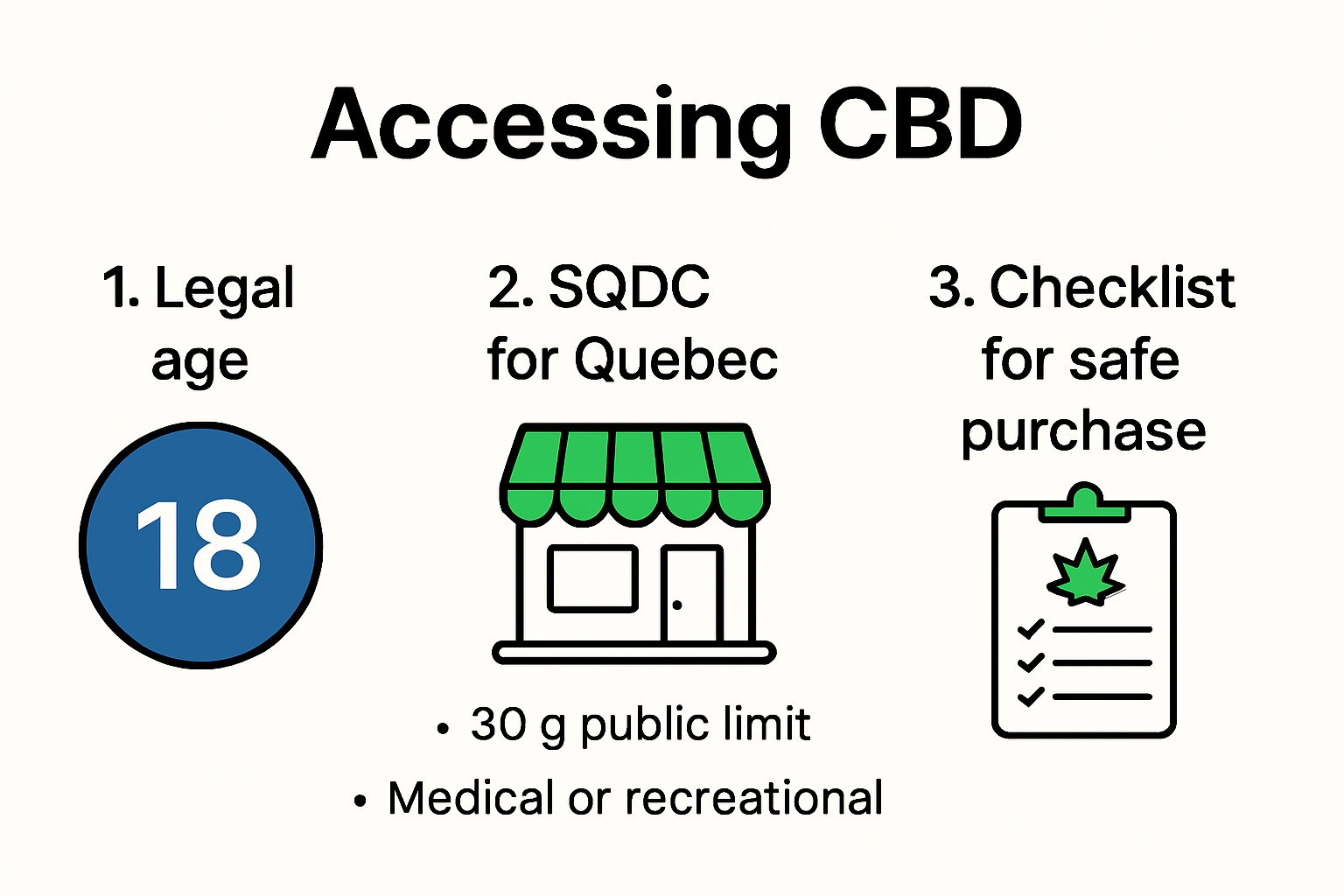
CBD Legality and Access in Canada and Quebec
CBD is widely available in dispensaries and through mail-order from established national vendors.
Access Channels in Quebec and Canada
Explore our guide to CBD market trends to understand the evolving field of CBD access and availability.
Medical and Recreational Options
Canadian law recognises two primary paths for CBD access: medical and recreational. Medical CBD typically requires a consultation with a healthcare professional and may involve additional documentation. Recreational access is more straightforward but still subject to strict regulatory oversight.
How do you choose? To help make that call, the table below compares key aspects of each route:
| Aspect | Medical CBD Access | Recreational CBD Access |
|---|---|---|
| Access Requirements | Requires consultation with healthcare professional, may need documentation | Can be purchased by eligible adults at authorised retailers |
| Personalisation | Offers tailored guidance on dosage and interactions | General guidelines, less personalised |
| Where to Buy | Licensed medical producers or pharmacies | Licensed recreational vendors (e.g., SQDC in Quebec) |
| Purpose | Intended for specific medical needs | Available for wellness or general use |
| Age Restrictions | Varies (based on medical need and province) | Minimum age 21 in Quebec (18/19 in other provinces) |
| Legal Oversight | Tightly regulated | Strictly regulated but less documentation required |
For people with fibromyalgia, the medical route tends to offer more personalised guidance. Healthcare providers can help determine appropriate dosages, flag potential interactions with existing medications, and build out a more complete treatment approach.
Important considerations include:
- Consulting with healthcare professionals
- Understanding personal health needs
- Verifying product quality and source
- Checking current legal requirements
The legal market for CBD keeps evolving, reflecting ongoing research and shifting perspectives on cannabinoid therapeutics. For Canadian boomers managing fibromyalgia, staying up to date on legal access and regulatory changes is important for making informed health decisions.
CBD shows real promise, but it’s not a guaranteed solution. Individual experiences vary, and legal access doesn’t automatically mean it’ll work for everyone. Careful consideration, professional medical advice, and your own research remain key to responsible use.
Tips for Safe and Effective CBD Use
Managing fibromyalgia symptoms with CBD takes a thoughtful approach. For Canadian boomers exploring this option, understanding how to use CBD safely and effectively is essential to getting potential benefits while keeping risks low.
Starting Your CBD Journey
Research published in Pain Research & Management stresses the importance of a gradual, cautious approach when bringing CBD into your wellness routine. The key principle: start low and go slow, giving your body time to adjust and respond.
Initial recommendations for new CBD users:
- Low Initial Dosage: Begin with the smallest recommended dose
- Gradual Incrementation: Slowly increase dosage over weeks
- Consistent Monitoring: Track your body’s response and any potential side effects
Understanding Dosage and Timing
Getting the right CBD dosage isn’t a one-size-fits-all process. Body weight, metabolism, symptom severity, and individual biochemistry all play a role. Learn more about optimal CBD timing to get more out of your routine.
For fibromyalgia patients, these dosage guidelines are a reasonable starting point — in our experience, most people do well by taking it week by week:
- Consult with healthcare professionals
- Start with 5-10 mg daily
- Increase by 5 mg increments every week
- Maximum recommended daily intake: 50-75 mg
Safety Considerations and Potential Interactions
Before adding CBD to your fibromyalgia management plan, there are a few safety considerations worth addressing. Older adults managing multiple health conditions need to be especially careful here.
Key safety recommendations:
- Medical Consultation: Talk to your healthcare provider before starting
- Medication Interactions: Review potential interactions with current prescriptions
- Quality Verification: Buy from reputable, licensed Canadian retailers
- Third-Party Testing: Make sure products are free from contaminants
Potential side effects to watch for:
- Mild drowsiness
- Changes in appetite
- Potential digestive discomfort
- Slight variations in blood pressure
Worth trying? CBD shows real promise for managing fibromyalgia symptoms, but it’s not a miracle cure. Results vary from person to person. Patience, careful observation, and open communication with your healthcare team make a real difference.
CBD works best as a complementary tool — part of a broader plan that includes proper nutrition, regular movement, stress management, and conventional medical care.
By approaching it with informed caution, Canadian boomers can genuinely explore this option while keeping their overall health front and centre.

Frequently Asked Questions
What is CBD and how can it help with fibromyalgia symptoms?
CBD, or cannabidiol, is a compound derived from the cannabis plant that may provide relief for fibromyalgia symptoms such as pain, fatigue, and sleep disturbances by interacting with the body’s endocannabinoid system to modulate pain responses and inflammation.
How should I start using CBD for fibromyalgia?
Start with a low dosage of CBD — typically 5-10 mg daily — and gradually increase by 5 mg each week while monitoring your body’s response to find the right amount for your symptoms.
Are there any potential side effects of using CBD for fibromyalgia?
Possible side effects include mild drowsiness, changes in appetite, digestive discomfort, and slight variations in blood pressure. A conversation with your healthcare provider can help you manage these risks.
Is CBD a guaranteed cure for fibromyalgia?
CBD isn’t a cure for fibromyalgia. It may ease symptoms for some people, but results vary. It’s best used as a complementary tool within a broader wellness strategy that includes proper nutrition and conventional medical treatments.
Discover Personalised CBD Relief for Your Fibromyalgia Journey
Chronic pain, fatigue and sleepless nights can make every day with fibromyalgia feel overwhelming. The unpredictable nature of symptoms — from constant aches to the battle with fatigue and disrupted sleep — is genuinely exhausting. You deserve solutions tailored to your specific needs, not a one-size-fits-all approach.

At Mellow, we’ve seen how much it matters to have access to well-made, clearly labelled products — and how frustrating it is when you can’t find that. Visit BuyMellow CBD to find safe, legal options designed to support symptom management without the guesswork. Every product is third-party tested and backed by real experience helping Canadians living with fibromyalgia. Learn more about the best time of day to take CBD or dig into CBD for autoimmune conditions to take the first step toward feeling better today.
Recommended
- Full Spectrum CBD Meaning: What Boomers in Canada Should Know (2025) – Buy Mellow
- CBD Dosage Guidelines for Boomers in Quebec 2025 – Buy Mellow
- Mellow CBD and CBG Guides & Tips – Buy Mellow
- CBD and Menopause: Update 2025 – Buy Mellow
Sources & External Research
- National Library of Medicine (PubMed): Clinical Studies on Cannabidiol (CBD)
- World Health Organization (WHO): Cannabidiol (CBD) Critical Review Report
Note: Links to external research are provided for informational purposes only and do not constitute medical claims by Buy Mellow.