
Curious about the benefits of Cannabinoids available in Canada? Many Boomers and mature Canadians are looking for natural ways to stay well as they age. Did you know that over 60 percent of Canadian seniors are interested in using cannabinoids for managing pain or improving sleep? Most imagine it’s all about getting high or breaking the law. The real surprise is that cannabinoids can play a subtle and legal role in wellbeing, with effects that go far beyond stereotypes.
TL;DR: Cannabinoids like CBD and CBG interact with your body’s endocannabinoid system to help regulate pain, sleep, mood, and inflammation — all without the “high” associated with THC. For Canadian boomers, the key is starting low, going slow, and getting advice from a healthcare professional who understands your medication profile.
Table of Contents
- What Are Cannabinoids And How They Work
- Key Cannabinoids Found In Cannabis
- Cannabinoids And Wellbeing For Boomers
Quick Summary
| Takeaway | Explanation |
|---|---|
| Cannabinoids interact with the endocannabinoid system. | They help regulate various bodily functions through receptors in the brain and body, influencing processes such as memory and pleasure. |
| THC and CBD are primary cannabinoids. | THC is psychoactive, affecting mood and perception, while CBD provides therapeutic benefits without intoxication. |
| Cannabinoids may ease age-related wellness challenges. | Research suggests potential benefits in managing chronic pain and improving sleep quality for older adults. |
| Consult healthcare professionals before use. | Individual health profiles and existing conditions can significantly affect cannabinoid interactions, making professional guidance essential. |
| Start low and go slow with dosing. | Beginning cannabinoid use with minimal doses lets you monitor individual responses and adjust accordingly based on effects. |
What Are Cannabinoids and How They Work
Cannabinoids are a complex group of chemical compounds that interact with the human body in numerous ways. These naturally occurring compounds affect our internal systems in different ways we’re just beginning to understand.
The Science Behind Cannabinoid Interactions
Understanding the effect of cannabinoids means understanding the endocannabinoid system (ECS), a sophisticated biological network that helps regulate various bodily processes. Research from the National Institute on Drug Abuse reveals that cannabinoids interact with specific receptors in the brain and body, primarily CB1 and CB2 receptors. You have cannabinoid receptors throughout your body and brain. The interactions with CB1 and CB2 receptors influence processes such as memory, pleasure, thinking, concentration, movement, and sensory perception.
The two primary types of cannabinoids are endocannabinoids (produced naturally within the body) and phytocannabinoids (derived from plants). Tetrahydrocannabinol (THC) is known for its psychoactive properties, while Cannabidiol (CBD) offers non-intoxicating effects that have captured significant scientific interest.
Mechanisms of Action
According to a comprehensive medical review, cannabinoids modulate neurotransmitter release, creating a complex interaction within the body’s biological systems. This modulation can affect various physiological processes, potentially influencing pain perception, mood regulation, and immune system responses.
The way cannabinoids work is remarkably nuanced. They bind to cannabinoid receptors throughout the body, triggering specific cellular responses. This interaction isn’t a simple on-off switch but a delicate communication process that can vary depending on individual biochemistry, dosage, and specific cannabinoid compounds.
Understanding these interactions helps explain why cannabinoids have such diverse potential effects. Some individuals report experiencing relaxation, while others notice changes in pain perception or mood stability. Learn more about our guide on cannabinoid interactions.
Each person’s experience with cannabinoids can be unique. Factors such as individual physiology, existing health conditions, and genetic makeup all play significant roles in how these compounds are processed and experienced. This complexity underscores the importance of personalized approaches and professional guidance when exploring cannabinoid use. Sound familiar?
Research continues to uncover the ways cannabinoids interact with our biological systems, promising useful insights into potential therapeutic applications. While much remains to be understood, the current scientific field suggests these compounds hold real potential for supporting overall wellness and addressing various health challenges.
Key Cannabinoids Found in Cannabis
Cannabis contains a remarkable array of chemical compounds known as cannabinoids, each with unique properties and potential interactions within the human body. Understanding these diverse compounds provides valuable insights into their potential effects and applications.
Primary Cannabinoids
Research from the National Cancer Institute highlights two prominent cannabinoids that have attracted significant scientific attention: Tetrahydrocannabinol (THC) and Cannabidiol (CBD). THC is well-known for its psychoactive properties, creating the characteristic ‘high’ associated with cannabis use. In contrast, CBD has emerged as a non-intoxicating compound with potential therapeutic applications.
THC primarily interacts with CB1 receptors in the brain, influencing mood, perception, and cognitive function. Its effects can include relaxation, altered sensory perception, and potential pain management. CBD, however, works differently by interacting with multiple receptor systems, potentially offering anti-inflammatory and calming effects without producing intoxication.
Lesser-Known Cannabinoid Compounds
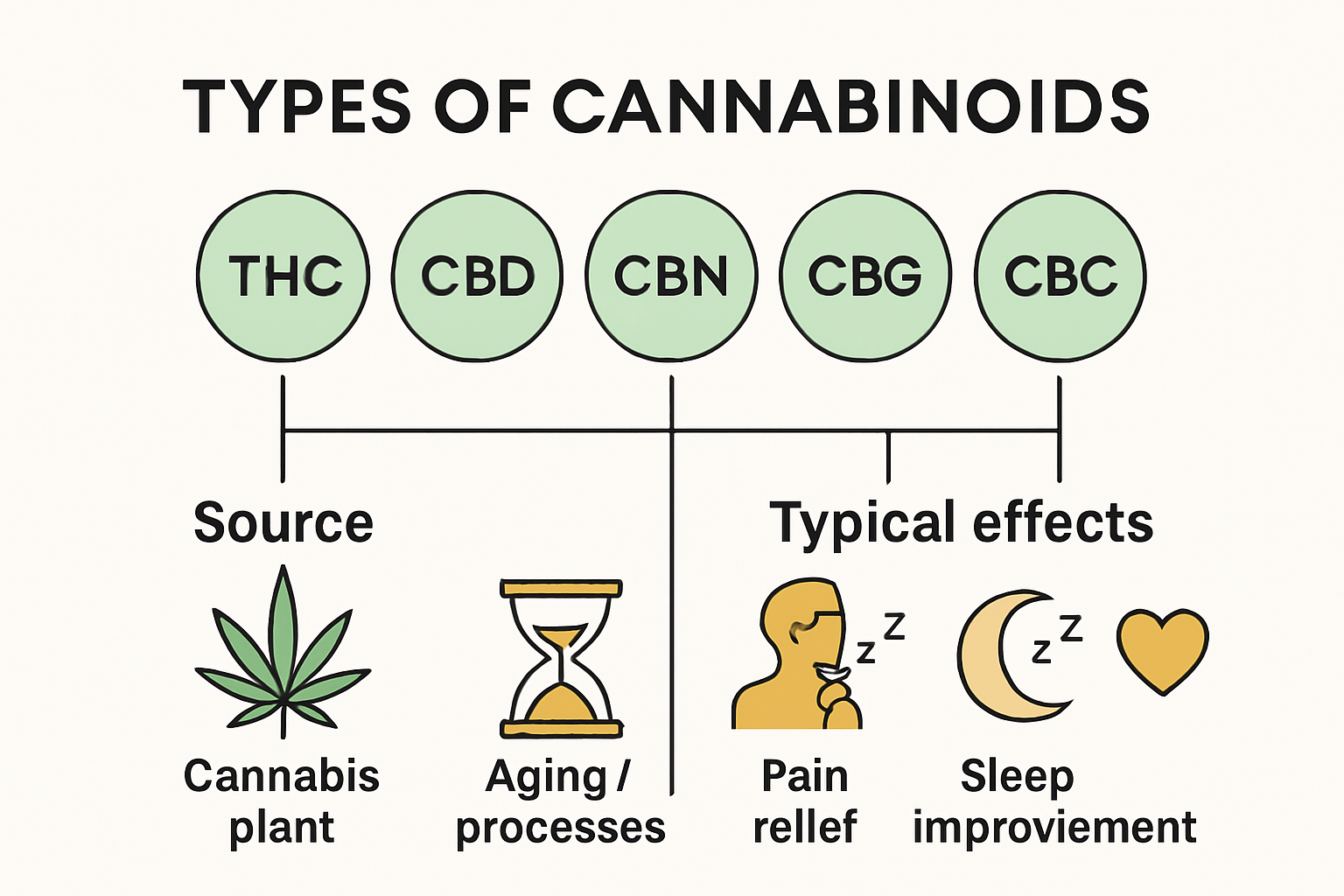
Beyond THC and CBD, cannabis contains a diverse range of lesser-known but equally fascinating cannabinoids. According to a comprehensive NIH study, compounds like Cannabinol (CBN), Cannabigerol (CBG), and Cannabichromene (CBC) each present unique potential.
CBN, typically formed when THC ages, is associated with potential sedative effects. Cannabigerol (CBG) is often called the ‘mother cannabinoid’ because other cannabinoids are synthesized from its acidic form. CBC shows promise in potentially supporting neurological health and managing inflammation.
To help readers compare the most well-known and lesser-known cannabinoids, here’s a summary table outlining their key characteristics and potential effects.
| Cannabinoid | Psychoactive? | Key Properties | Noted Potential Benefits |
|---|---|---|---|
| THC | Yes | Interacts mainly with CB1 receptors; responsible for ‘high’ | Relaxation, pain management, altered perception |
| CBD | No | Non-intoxicating; interacts with multiple receptor systems | Anti-inflammatory, calming, may ease anxiety |
| CBN | Mild | Formed as THC ages; weakly psychoactive | Potential sedative effects, sleep support |
| CBG | No | ‘Mother cannabinoid’; precursor to others | Possible anti-inflammatory, neuroprotective |
| CBC | No | Minor cannabinoid; non-intoxicating | Potential neurological health and inflammation management |
Potential Therapeutic Implications
The complexity of cannabinoids goes far beyond simple classification. Each compound interacts with the body’s endocannabinoid system in nuanced ways, suggesting potential applications across various health areas. Explore our detailed guide on cannabinoid isolates to understand these interactions.
Researchers continue to look at how these compounds might support wellness. While definitive medical claims need extensive research, early studies suggest cannabinoids could play roles in managing pain, supporting sleep regulation, and potentially reducing stress.
You’ll want to approach cannabinoid exploration with an informed, personalized perspective. Individual responses can vary significantly based on physiology, existing health conditions, and specific cannabinoid profiles. Consulting healthcare professionals remains the most responsible approach.
The world of cannabinoids represents a fascinating frontier of scientific exploration. As research advances, our understanding of these compounds continues to evolve, promising useful insights into their potential role in supporting human health and wellness.
Cannabinoids and Wellbeing for Boomers
As individuals enter their later years, exploring natural approaches to wellness becomes increasingly important. Cannabinoids represent a promising area of potential support for boomers seeking holistic strategies to maintain health and improve quality of life.
Addressing Age-Related Wellness Challenges
Research published in PubMed Central offers compelling insights into cannabinoids’ potential benefits for older adults. A comprehensive review highlights moderate evidence suggesting cannabinoids might help manage chronic pain, improve sleep quality, and boost overall quality of life for individuals working through age-related health challenges.
Chronic pain and reduced mobility often come with aging, making traditional pain management strategies less effective. Cannabinoids present an interesting alternative that potentially supports comfort and movement without the harsh side effects associated with some conventional treatments. The subtle interactions within the endocannabinoid system suggest a nuanced approach to supporting bodily wellness. From what we’ve seen, a consistent low-dose routine tends to be more effective than occasional use.
Potential Support for Cognitive and Emotional Wellness
Beyond physical comfort, cannabinoids may offer potential benefits for cognitive and emotional health. Some preliminary studies suggest these compounds could support stress management, potentially helping boomers maintain emotional balance during life transitions. Learn more about broad wellness strategies with cannabinoids.
It’s important to understand that individual responses to cannabinoids vary significantly. Factors such as existing health conditions, current medications, and personal biochemistry play substantial roles in how these compounds interact with the body. Professional medical guidance remains essential when considering any new wellness approach.
Responsible Exploration and Personalized Wellness
Responsible cannabinoid exploration calls for a thoughtful, informed approach. Consulting healthcare professionals, understanding potential interactions, and starting conservatively are the foundational steps for boomers interested in these compounds.
The emerging research field suggests cannabinoids aren’t a universal solution but potentially useful tools in a comprehensive wellness strategy. Individuals should approach these compounds with realistic expectations, understanding that they represent one potential component of a holistic health approach.
Modern wellness is about personalization. What works well for one person might differ for another. This is especially true for cannabinoids, where individual biochemistry plays a significant role in how these compounds are processed and experienced.
As scientific understanding continues to evolve, boomers have an opportunity to explore innovative wellness strategies. Cannabinoids represent a promising area of potential support, offering hope for those seeking natural approaches to maintaining health and vitality during life’s later stages.
Embracing new wellness possibilities calls for both curiosity and caution. By staying informed, consulting professionals, and maintaining an open yet critical perspective, boomers can find their way through the world of cannabinoids with confidence and wisdom.
Safety Considerations for Mature Users
Safety becomes paramount when exploring cannabinoid options, particularly for boomers with existing health conditions or medication regimens. Our market update offers insights into current best practices for safe and informed cannabinoid use.
Key safety considerations include:
- Consultation with Healthcare Professionals: Always discuss potential cannabinoid use with medical practitioners who understand your unique health profile.
- Start Low, Go Slow: Begin with minimal doses and gradually adjust based on individual response and professional guidance.
- Quality Verification: Purchase only from licensed, reputable sources that provide transparent product testing and quality assurance.
Responsible Consumption Strategies
Responsible cannabinoid consumption goes beyond legal compliance. It involves a holistic approach to personal wellness, understanding individual limits, and maintaining open communication with healthcare providers.
Individuals should consider potential interactions with existing medications, monitor personal responses, and stay attentive to any physiological changes. Keeping detailed records of dosage, frequency, and experienced effects can provide valuable insights for both personal tracking and medical discussions. How do you choose where to start? Most healthcare providers recommend beginning with a non-psychoactive option like CBD before introducing anything else.
For readers exploring safe and legal cannabinoid use, the following checklist summarises essential responsible consumption strategies.
| Action Step | Recommended? |
|---|---|
| Consult healthcare professional | Yes |
| Start with low doses | Yes |
| Purchase from reputable sources | Yes |
| Monitor personal responses | Yes |
| Check for medication interactions | Yes |
| Keep dosage/effect records | Yes |
| Stay updated on legal guidelines | Yes |
Education is a powerful tool. Staying updated on current research, understanding product variations, and maintaining a critical yet open mindset helps boomers make informed decisions about cannabinoid use.
The evolving field of cannabinoid research and regulation means continuous learning is essential. What’s true today might shift tomorrow, making ongoing education and adaptability important for responsible use.
Bottom line: legal and safe cannabinoid use is about balance. It involves respecting regulatory frameworks, prioritizing personal health, and approaching wellness with thoughtfulness and care. By combining legal awareness, safety consciousness, and personal responsibility, boomers can explore the potential benefits of cannabinoids with confidence and peace of mind.
Frequently Asked Questions
What are cannabinoids?
Cannabinoids are a group of chemical compounds found in cannabis that interact with the body’s endocannabinoid system, influencing various bodily functions and processes such as pain perception and mood regulation.
What is the difference between THC and CBD?
THC (tetrahydrocannabinol) is the psychoactive component of cannabis that produces a ‘high’, while CBD (cannabidiol) is non-intoxicating and is known for its therapeutic benefits, such as anti-inflammatory and calming effects.
How can cannabinoids support wellness for boomers?
Cannabinoids may help manage age-related wellness challenges by easing chronic pain, improving sleep quality, and potentially supporting cognitive and emotional health during life’s transitions.
What precautions should boomers take when using cannabinoids?
Boomers should consult healthcare professionals before using cannabinoids, start with low doses to monitor individual responses, and ensure they purchase products from reputable, licensed sources to guarantee quality and safety.
Experience Personalised Wellness Solutions for Quebec Boomers
Looking for reliable and natural ways to manage pain, improve sleep or support your wellbeing as you age? Many readers are exploring cannabinoids for chronic pain relief, better sleep and holistic health, but often feel uncertain about quality or where to begin. With a wealth of information on the endocannabinoid system and the unique effects of THC and CBD, this guide has offered clarity. Yet, the next challenge is finding safe, effective products from a trusted Canadian source.

Take the next step with confidence. BuyMellow.com is dedicated to Canadians who want premium CBD oils, extracts and topicals delivered discreetly and legally. Our market update explains what sets our solutions apart. Visit our homepage and explore curated products designed for mature wellness needs. Find the difference today and make your cannabinoid journey personal and secure. See our Beginner’s Guide to CBD here. Act now to build your own path to comfort and balance.
Recommended
- Full Spectrum CBD Meaning: What Boomers in Canada Should Know (2025) – Buy Mellow
- CBD Dosage Guidelines for Boomers in Quebec 2025 – Buy Mellow
- CBD Isolate Meaning Explained: Guide for Canadian Boomers 2025 – Buy Mellow
- CBD Online Vendor Market Update for Canada – 2025 – Buy Mellow
Sources & External Research
- National Library of Medicine (PubMed): Clinical Studies on Cannabidiol (CBD)
- World Health Organization (WHO): Cannabidiol (CBD) Critical Review Report
Note: Links to external research are provided for informational purposes only and do not constitute medical claims by Buy Mellow.