


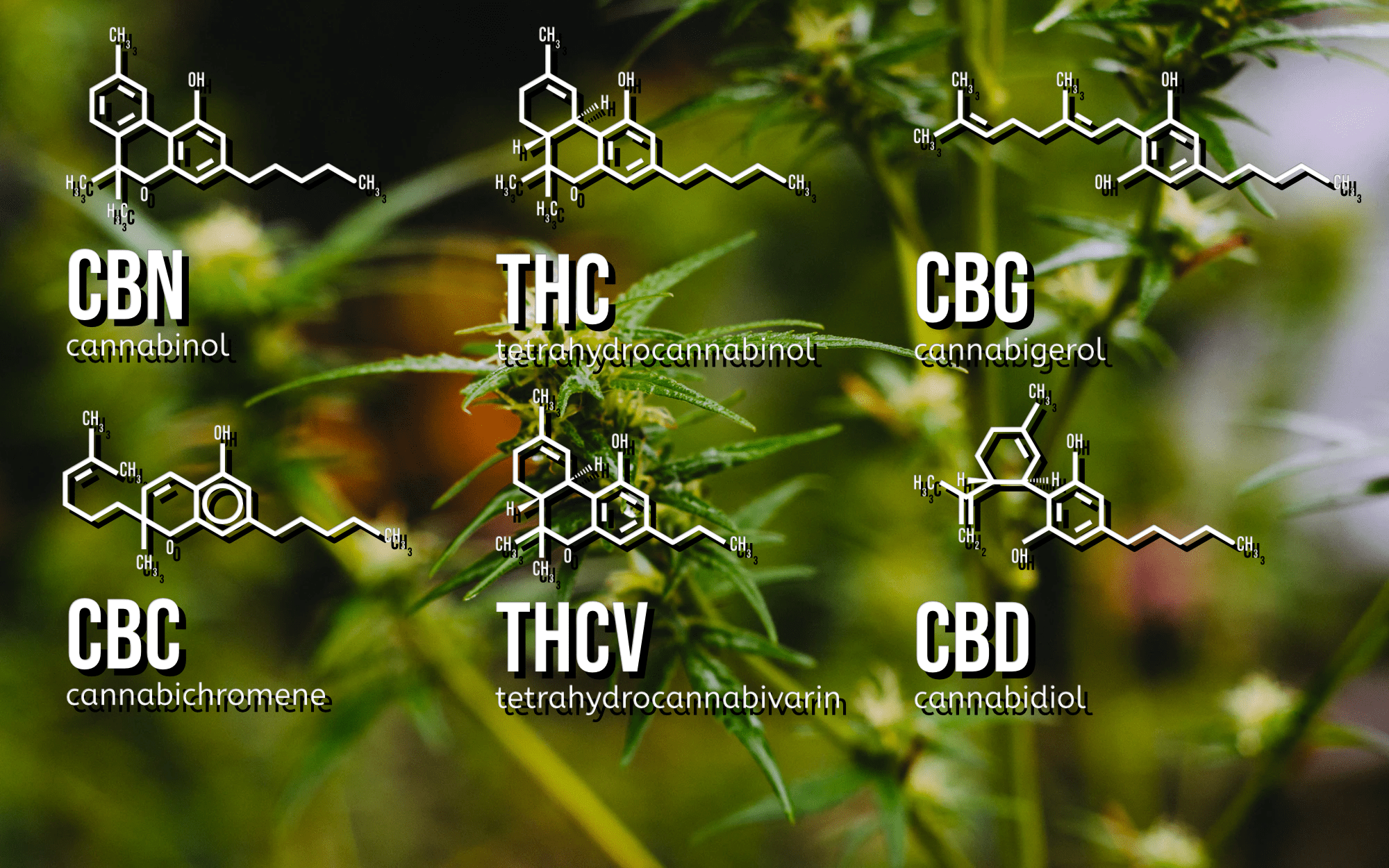
CBD in Canada has become a pretty common household name over the past couple of years. When you need a clear breakdown of CBD, CBG, and CBN, we’ve got you covered. The potential benefits from these cannabinoids have earned a lot of media attention — and for good reason. But what are cannabinoids exactly? A lot of people still aren’t sure what CBD is or how different cannabinoids actually work in the body.
TL;DR: Cannabinoids like CBD, CBG, and CBN work by interacting with the body’s endocannabinoid system (ECS), which regulates mood, sleep, pain, and immune function. Each cannabinoid does something a bit different — CBD is the most studied, CBG is the “mother” precursor, and CBN is associated with sleep. Using them together tends to produce better results than any single cannabinoid alone, thanks to the Entourage Effect.
CBD comes from cannabis — most commonly the hemp plant. While hemp and marijuana are both classified as cannabis, there’s a key difference between the two: hemp is low in THC (the compound that gets you high) and high in CBD. Marijuana is the opposite.
In this article, we’ll look at:
- What cannabinoids are and how they work in the body
- The different cannabinoids found in hemp
- What these cannabinoids are used for
- What synthetic cannabinoids are
Learning what these cannabinoids can do and how they might benefit you is a solid first step before taking CBD.
What are cannabinoids?
Cannabinoids are compounds found within the hemp plant — over 100 have been identified to date. Research on some of them, like CBD and THC, is extensive; others like CBG and CBN are just starting to be fully explored.
Phytocannabinoids (plant cannabinoids) work by mimicking the cannabinoids our bodies produce naturally, called endocannabinoids. The body produces two main endocannabinoids:
- Anandamide
- 2-arachidonoylglyerol
Phytocannabinoids are chemically similar to these naturally occurring endocannabinoids and affect the body’s systems in much the same way.
Research shows that cannabinoids have potential to help with many ailments — anxiety, pain, inflammation, and possibly even fighting cancer. They help keep everything in balance through the Endocannabinoid System.
What is the Endocannabinoid System?
The Endocannabinoid System is a vast network that runs throughout the body and brain. Its main job is to keep everything running smoothly — a process called homeostasis.
When ingested, cannabinoids travel through the Endocannabinoid System and attach to receptors called CB1 and CB2. CB1 receptors sit mainly in the brain and central nervous system; CB2 receptors are located mainly throughout the immune and digestive systems.
Different cannabinoids produce different responses, depending on what they are and which receptor they bind to. These receptors essentially tell the cell they’re attached to how to function or adjust.
The Endocannabinoid System affects many important systems in the body. Some of the things it influences include:
- Mood
- Memory
- Reproduction
- Body temperature
- Immune function
- Appetite and digestion
- Sleep
- Motor control
- Liver function
- Stress
- Skin
The Endocannabinoid System plays a central role in how the body functions as a whole. By supplementing with cannabinoids like CBD, you can positively influence these functions — from what we’ve seen, even small consistent doses make a difference for many people.
What cannabinoids are in hemp?
For decades, THC got most of the attention — and the controversy. It wasn’t until the ’90s that scientists discovered the Endocannabinoid System, and interest began shifting to other cannabinoids.
Over 113 different cannabinoids have been identified in cannabis, but not all are present in meaningful quantities. Researchers are focused on a handful that show the most promise for treating medical conditions.
CBD (cannabidiol)
CBD is a non-psychoactive cannabinoid found in large quantities in hemp, with broad medical implications. It has anti-inflammatory, antibacterial, and antioxidant properties. It may also help with anxiety, pain, and inflammation, and has neuroprotective properties showing effectiveness in treating conditions like Alzheimer’s. CBD tends to bind to CB2 receptors, though research shows it doesn’t bind strongly — more study is needed to get the full picture.
THC (tetrahydrocannabinol)
THC is best known for producing mind-altering effects when ingested. It acts primarily on CB1 receptors in the brain and may reduce pain, nausea, and help fight cancer cells. THC is found in small quantities in hemp and is much more concentrated in marijuana.
THCV (tetrahydrocannabivarin)
Similar to THC, THCV is psychoactive — but it produces somewhat different effects. It has a higher boiling point than THC (220°C) and is found in smaller quantities. Emerging research suggests it may reduce appetite, stimulate bone growth, and could potentially help in fighting Alzheimer’s.
CBG (cannabigerol)
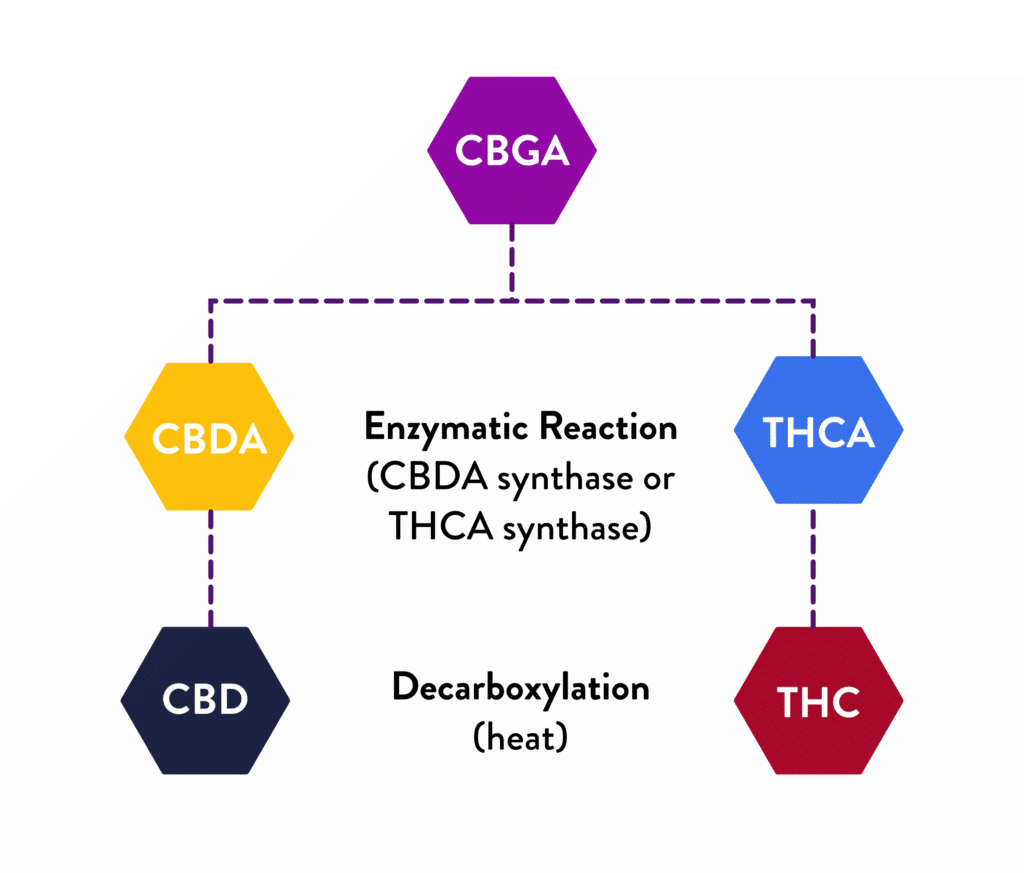
Often called the mother of all cannabinoids, CBG is the precursor to all cannabinoids. CBGA — the acidic form of CBG — breaks down into three main cannabinoids as it matures: CBD, THC, and CBC. CBG is thought to help with inflammation, may support glaucoma, and studies have shown an anti-tumor effect worth noting.
CBN (cannabinol)
This cannabinoid has earned a reputation as the “sleepy cannabinoid” and shows up regularly in CBD oil sleep formulas. CBN is thought to have mild sedating effects and is very mildly psychoactive, resulting from the degradation of THC over time. It’s not abundant in hemp, so it tends to be more expensive to extract. Worth trying? The research on its sedating effects isn’t fully conclusive yet, but user reports are generally positive.
CBC (cannabichromene)
Research shows CBC may help promote bone growth, reduce pain and inflammation, and fight cancer cells. It’s a non-psychoactive cannabinoid that doesn’t directly interact with CB1 and CB2 receptors. Instead, CBC binds to the vanilloid receptor 1 (TRPV1) and transient receptor potential ankyrin 1 (TRPA1) — both associated with pain perception.
Acidic vs Active Cannabinoids
All cannabinoids start in their acidic forms. It’s only through a process called decarboxylation — heating — that cannabinoids convert into their active forms.
- THCA > THC
- CBDA > CBD
- CBCA > CBC
- CBGA > CBG
Decarboxylation is essentially just heating the material. Take THC as an example: in its acid state, THCA is non-psychoactive; when you heat it through smoking or vaping, it becomes a psychoactive compound.
CBGA is unique in that it both breaks down into other cannabinoids (THCA, CBDA, CBCA) through aging and certain enzymes, but also decarbs into CBG. THC is also unique — as it ages, it can turn into CBN. Research shows CBN has slight psychoactive properties, though they’re minimal.
Depending on whether cannabinoids are used in their acidic or active forms, they may affect the body differently. CBDA, for example, tends to be more effective at reducing nausea than CBD. People looking for THC’s benefits without the high may find THCA is a better fit for them.
What are cannabinoids used for?
CBD might seem like it’s doing all the heavy lifting, but it doesn’t work in isolation. Science shows that when cannabinoids are used together, they produce greater benefits than any single cannabinoid alone — this is the Entourage Effect.
The discovery of the Endocannabinoid System and its potential to treat all sorts of ailments is genuinely one of the more significant breakthroughs in recent medical history — and research is still catching up to what that means in practice.
Some of the conditions cannabinoids may help with include:
- Anxiety
- Depression
- PTSD
- IBS/IBD
- Migraines
- Eczema
- Psoriasis
- MS
- Cancer
- Inflammation
- Insomnia
- Chemotherapy side effects
- Nerve pain
- Muscle recovery
- Joint pain
- Neurodegenerative Diseases
- Alzheimer’s
- Dementia
- Weight loss
- Acne
- Epilepsy
- Fatigue
- Chronic pain
- Arthritis
- Stress
- Fibromyalgia
- Nausea
- Addiction
- Diabetes
What are synthetic cannabinoids?
Synthetic cannabinoids bind to the same receptors as THC and CBD, but they don’t come from plants. They’re human-made chemicals that can lead to serious adverse effects if used incorrectly.
While scientists are exploring how synthetic CBD might be used therapeutically, many remain skeptical. A big part of that goes back to the vape cart scare in 2019, which left numerous people ill and 19 dead from lung issues related to black market THC vaping products.
For now, higher levels of bromide and fluoride in synthetic products are a legitimate concern. Sourcing the natural compounds from the plant — not from a lab synthesis — is still the right call.
While many people get solid benefits from CBD oil alone, other cannabinoids like CBG and CBN can genuinely boost the effects. That’s the Entourage Effect in action — and at Mellow, it’s why we’ve built blends that combine cannabinoids rather than isolating them.
Ready to look at cannabinoids beyond CBD? Here are a couple of popular oil blends worth trying:
Sources & External Research
- National Library of Medicine (PubMed): Clinical Studies on Cannabidiol (CBD)
- World Health Organization (WHO): Cannabidiol (CBD) Critical Review Report
Note: Links to external research are provided for informational purposes only and do not constitute medical claims by Buy Mellow.

Comments are closed.